What is Vibium AI?
At its core, Vibium is a reimagining of browser automation for the AI era. It is not just a wrapper around Selenium; it is a new architecture built on the WebDriver BiDi (Bi-Directional) protocol.
While traditional Selenium sends commands to the browser and waits for a response (HTTP request/response), Vibium establishes a real-time, two-way WebSocket connection. This allows the test script to “listen” to the browser events in real-time, much like Playwright, but with a critical addition: An AI Brain.
The Core Philosophy: Intent Over Implementation
In a traditional Selenium setup, you write:
driver.findElement(By.id(“submit-btn”)).click();
This is Implementation. It tells the computer exactly which pixel-perfect element to touch. If the ID changes, the test fails.
In Vibium, you write:
vibium.click(“Submit Order”);
This is Intent. The AI analyzes the page, understands which element corresponds to the concept of “Submit Order” (regardless of its ID, class, or location), and executes the action.
Key Features of the Vibium Approach
Vibium introduces several concepts that are rapidly becoming the standard for modern open-source web testing tools.
- Semantic Self-Healing
Vibium uses machine learning models to build a “map” of your application. It doesn’t look at the DOM as a tree of code tags; it looks at it as a collection of visual and semantic objects.
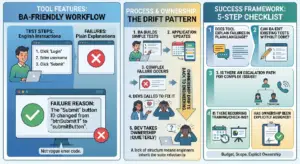
If you rename your “Login” button to “Sign In” and change its color to blue, a traditional script would break. Vibium’s AI sees that this is still the only primary action button in the authentication form and successfully clicks it, “healing” the test execution in real-time.
- Natural Language Scripting
Because the engine understands semantic intent, it allows for “Vibe Coding.” You can write test steps in plain English or use Generative AI tools (like Claude or ChatGPT) to generate the automation logic for you. This democratizes automation, allowing product managers and manual testers to contribute to the repository.
- The “App Map” (Model-Based Testing)
Vibium proposes a return to “Model-Based Testing.” Instead of writing linear scripts (A -> B -> C), the AI builds a graph model of your application’s possible states. It can then intelligently explore these paths to find bugs, acting more like a human explorer than a robotic script.
Is Vibium the “Selenium Killer”?
No. It is better to think of it as the Selenium Saviour.
Selenium has been losing market share because of the “High Maintenance” tax. Teams spend more time fixing broken locators than testing new features. Selenium 4.0 brought us the BiDi protocol, but it didn’t bring the AI layer to use it effectively.
Vibium acts as that layer. It keeps the universality of WebDriver (which works on every browser and OS) but strips away the brittleness. It validates the strategy that Selenium alternatives like CloudQA have been advocating for: The future is Low-Code and AI-Driven.
The Gap Between Promise and Reality
As of 2025, Vibium is an exciting, bleeding-edge open-source project. However, for enterprise teams, “bleeding edge” often means “production risk.”
- Documentation: Is still evolving.
- Stability: Early versions may struggle with complex, custom canvas applications.
- Support: As an open-source tool, support is community-based.
This leaves Engineering Leaders in a bind. They need the resilience of Vibium today, but they need the stability of an enterprise platform.
How CloudQA Bridges the Gap
This is where CloudQA fits into the ecosystem. We have built our platform on the same principles that drive Vibium, but we have packaged them for enterprise reliability today.
We are the “Enterprise Implementation” of the Vibium philosophy:
- Self-Healing Now: You don’t need to wait for an open-source release. CloudQA’s engine already heals broken Selenium locators in real-time during execution.
- WebDriver BiDi Integration: We leverage the same modern protocols to ensure fast, stable execution across our cloud grid.
- Managed Infrastructure: Unlike raw Vibium where you must manage your own execution environment, CloudQA provides a scalable cloud infrastructure out of the box.
Conclusion
Vibium AI represents the inevitable evolution of the Selenium project. It proves that the industry has accepted a new truth: Static scripts are dead. AI-adaptive automation is the standard.
Whether you choose to experiment with the open-source Vibium libraries or adopt a battle-tested platform like CloudQA, the direction is clear. The days of fighting with XPaths and CSS selectors are ending. The era of Intent-Based Testing has begun.
Frequently Asked Questions
Q: Is Vibium a replacement for Selenium?
A: Not exactly. It is built on top of the new standards established by Selenium (WebDriver BiDi). It is an evolution that abstracts away the complex, brittle parts of Selenium, making it easier to use and more reliable.
Q: Can I use Vibium with my existing Selenium Java framework?
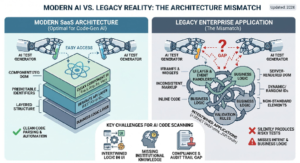
A: Vibium is designed to be language-agnostic eventually, but it currently targets the modern “AI-native” developer workflow. Integrating it into a legacy Java TestNG framework may require significant refactoring or a “strangler fig” approach where you migrate tests gradually.
Q: How is CloudQA different from Vibium?
A: Vibium is an open-source framework you install and manage yourself. CloudQA is a fully managed platform (SaaS). CloudQA includes the infrastructure (browsers), the test management dashboard, reporting, and the AI self-healing capabilities all in one login, with no setup required.
Related Articles