Facebook

The 2026 Guide to Continuous Synthetic Monitoring Moving Beyond the Ping

Last Updated: March 23rd 2026

Stop relying on basic ping tests to tell you if your revenue funnel is broken. Shift your quality assurance right and monitor your actual user journeys in real time. Try the CloudQA Agentic Testing Suite and activate TruMonitor today to protect your production environment with continuous zero code synthetic monitoring.

Table of Contents

Introduction The Failure of the Basic Ping

In the early days of the internet, monitoring website availability was an incredibly straightforward technical exercise. System administrators relied on a simple network utility known as the ping. If a server responded to a ping request, the website was considered online. If the server failed to respond, the website was offline, and an engineer was dispatched to reboot the physical hardware. As web architecture evolved, this basic ping was upgraded to a basic hypertext transfer protocol check. If the server returned a two hundred okay status code, the monitoring tool displayed a green checkmark on a dashboard, and the operations team assumed the application was functioning perfectly.

In the highly complex distributed software ecosystems of 2026, relying on a basic network ping to measure system health is not just inadequate. It is actively negligent. A modern web application can easily return a perfect two hundred okay status code while being completely unusable to a human customer.

Consider a modern electronic commerce platform. The web server might be perfectly healthy and responding to basic uptime checks in milliseconds. However, if a third party inventory management service has crashed, or if a recent cascading style sheet update has accidentally hidden the checkout button behind a promotional banner, no customer can actually purchase a product. The server is technically up, but the business is fundamentally down. Organizations are losing millions of dollars to these silent failures because their legacy monitoring tools are completely blind to the actual user experience. To secure modern revenue streams and protect brand reputation, engineering teams must move beyond the ping and embrace continuous synthetic monitoring.

The Evolution of Uptime in the Cloud Native Era

To understand the necessity of synthetic monitoring, one must first analyze how the definition of uptime has evolved. In a monolithic architecture, the application and the database resided on the same server. Uptime was a binary measurement of infrastructure health.

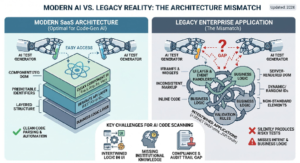
Today, enterprise applications are built using cloud native microservice architectures. A single page application might rely on fifty different independent microservices operating across multiple geographic regions. Furthermore, these applications are heavily dependent on external third party services. A standard software as a service platform relies on a centralized provider for identity authentication, a specialized vendor for payment processing, another service for sending electronic mail notifications, and a content delivery network for rendering images.

In this decentralized reality, uptime is no longer a measurement of server availability. Uptime is now defined as the continuous availability of critical business workflows. If the third party payment processor experiences an outage, your application infrastructure might be perfectly healthy, but your users cannot complete their transactions. Your business workflow is broken. Monitoring this sprawling interconnected web of dependencies requires a tool that interacts with the application exactly as a real human user would, evaluating the entire system from the outside in.

What is Continuous Synthetic Monitoring

Continuous synthetic monitoring is an advanced proactive monitoring strategy that utilizes robotic clients to simulate user traffic. Instead of waiting for real customers to visit the website and report a problem, synthetic monitoring tools automatically navigate the application at scheduled intervals, executing critical user journeys from locations all around the world twenty four hours a day.

These robotic clients do not simply check if a uniform resource locator is active. They open a real web browser, render the document object model, execute JavaScript, click on buttons, fill out complex forms, and validate that the correct data is displayed on the screen. Simultaneously, they monitor the underlying application programming interface calls to ensure the backend microservices are responding accurately and securely.

If a synthetic monitor attempts to log into an application and the authentication process takes ten seconds instead of the expected two seconds, or if the login button fails to respond entirely, the monitoring system immediately registers a failure. It then captures a video recording of the failed interaction, takes a snapshot of the document object model, logs the network performance data, and instantly alerts the site reliability engineering team. This allows organizations to discover and resolve critical application defects long before real human customers ever encounter them.

The Convergence of Quality Assurance and Site Reliability

Historically, the software development lifecycle was strictly divided into isolated phases. The quality assurance team was responsible for testing the application in pre production staging environments to ensure it functioned correctly. Once the software was deployed to production, the responsibility for maintaining its health was handed off to the operations and site reliability engineering teams. These teams utilized completely different tools, spoke different technical languages, and operated in separate silos.

Continuous synthetic monitoring bridges this divide through a strategic methodology known as shifting right. If an organization has already invested significant engineering resources into building robust automated functional tests for their deployment pipeline, there is no logical reason to discard those tests once the code is in production.

Modern intelligent platforms allow quality assurance engineers to seamlessly transition their pre production automated test scripts into production synthetic monitors. The exact same zero code script that validates the checkout flow during the build phase is repurposed to run every five minutes in the live production environment. This convergence entirely eliminates duplicate effort. It aligns the quality assurance team and the operations team around a single unified definition of application health, fostering a culture of shared responsibility and massively accelerating incident response times.

Moving Beyond Basic Uptime Evaluating Complex User Journeys

The true power of synthetic monitoring lies in its ability to validate highly complex multi step user journeys. Basic uptime monitoring tells you if the front door of your digital store is open. Synthetic monitoring walks through the front door, picks up an item, attempts to apply a promotional code, checks the shipping rates, and attempts to process a transaction.

Evaluating these complex journeys requires sophisticated stateful testing capabilities. A synthetic monitor must be able to securely handle dynamic data. For example, if a monitor is testing a healthcare patient portal, it must be able to securely input synthetic credentials, navigate past a multi factor authentication challenge, access a specific medical record, and verify that the data on the screen belongs exclusively to the synthetic test patient.

Furthermore, the monitor must be able to validate complex business logic. In a financial technology application, a synthetic script might simulate transferring funds between two accounts. The monitor must verify that the visual interface confirms the transfer, but it must also utilize an application programming interface call to query the backend database and ensure the actual account balances were updated correctly. By continuously executing these deep stateful verifications in production, organizations ensure that their most critical revenue generating and compliance mandated workflows remain completely secure and functional under real world conditions.

The Role of Artificial Intelligence in Synthetic Monitoring

Executing automated scripts in a live production environment introduces a unique set of challenges. Production environments are highly dynamic. Marketing teams constantly update promotional banners, designers run constant user interface experiments, and dynamic content shifts unpredictably. If a synthetic monitor relies on rigid procedural scripts, these minor cosmetic changes will cause the monitor to fail continuously, generating massive amounts of false alarms.

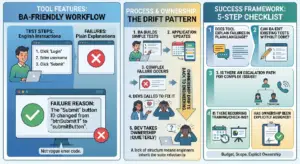
To solve this, the next generation of synthetic monitoring is powered by artificial intelligence and machine learning. Intelligent synthetic platforms incorporate advanced self healing algorithms. If a web developer changes the internal identifier of the checkout button from submit order to confirm purchase, a legacy script will instantly fail and trigger an emergency alert at three in the morning.

An artificial intelligence driven synthetic monitor intercepts this failure. It utilizes computer vision and semantic analysis to scan the live web page, locate the new button based on its visual appearance and contextual meaning, and successfully clicks it to complete the transaction. The artificial intelligence heals the script dynamically, ensuring the critical business monitoring continues uninterrupted while quietly logging a minor warning for the engineering team to review during normal business hours. This resilience is absolutely essential for maintaining trust in the monitoring system.

Combating Alert Fatigue and Intelligent Thresholds

One of the most pervasive operational challenges facing site reliability engineers is alert fatigue. When monitoring tools are poorly configured, they bombard engineering teams with thousands of low priority notifications and false positive alerts. Over time, engineers become desensitized to the noise. They begin to ignore the monitoring channels entirely, creating a highly dangerous environment where a legitimate critical outage can easily go unnoticed.

Continuous synthetic monitoring combats alert fatigue through the implementation of intelligent statistical thresholds. Legacy monitoring systems relied on static thresholds. An engineer might configure an alert to trigger if a page load takes longer than three seconds. However, internet routing is inherently unstable. A momentary spike in global network latency might cause a single synthetic run to take four seconds, triggering a useless alert for a problem that resolves itself instantly.

Modern platforms utilize machine learning to establish dynamic performance baselines. The system continuously analyzes historical execution data to understand the normal performance variations of the application throughout different times of the day and different days of the week. Instead of alerting on a static number, the system only triggers a critical page when the application performance deviates significantly from its historical statistical baseline. Furthermore, advanced platforms require a failure to be verified from multiple geographic locations before triggering an alert, ensuring that temporary regional network anomalies do not wake up the engineering team unnecessarily.

CloudQA TruMonitor A Unified Approach to Production Reliability

Navigating the fragmented landscape of application performance monitoring tools is incredibly difficult for enterprise procurement teams. Many legacy providers offer synthetic monitoring as an expensive add on to their massive complex server monitoring suites. These tools frequently require specialized programming knowledge to configure and are entirely inaccessible to non technical business stakeholders.

CloudQA has engineered a fundamentally different approach through its TruMonitor module. TruMonitor is built natively into the CloudQA zero code quality engineering platform. This architecture provides organizations with a completely unified approach to software quality. A business analyst or a product manager can utilize the highly intuitive visual test builder to record a critical user journey. With a single click, that exact codeless recording is instantly deployed as a continuous synthetic monitor running globally across the production environment.

When a TruMonitor execution detects an anomaly, it provides unparalleled diagnostic clarity. Traditional monitoring tools often provide a cryptic textual error log that leaves engineers guessing about the root cause. TruMonitor automatically captures a high definition video recording of the failed user session, alongside a complete snapshot of the document object model and the corresponding network performance waterfall.

This comprehensive diagnostic package is instantly routed through native integrations to incident management platforms like Opsgenie, PagerDuty, or Slack. When a site reliability engineer receives the alert on their mobile device, they can instantly watch the video of exactly what broke on the screen. This visual clarity drastically reduces the mean time to resolution, allowing teams to identify and fix critical defects in minutes rather than hours.

Industry Specific Applications of Continuous Monitoring

The architectural advantages of continuous synthetic monitoring are universally applicable, but they provide immense strategic value in specific highly regulated and velocity driven industries.

Electronic Commerce and Revenue Protection

In the digital retail sector, downtime is measured in lost dollars per second. Electronic commerce platforms utilize continuous synthetic monitoring to protect their entire revenue funnel. Organizations configure synthetic scripts to constantly monitor dynamic shopping carts, search filtering logic, and complex third party payment gateways. By simulating thousands of purchases every day, digital retailers ensure their promotional pricing engines are calculating discounts correctly and that their payment processors are returning valid authorization tokens securely, completely safeguarding their profit margins against silent integration failures.

Software as a Service and Multi Tenant Ecosystems

Modern software as a service companies serve thousands of independent corporate clients through shared multi tenant infrastructure. A failure in a core microservice can instantly degrade the experience for the entire customer base. Software as a service providers leverage synthetic monitoring to track the availability and response times of their critical application programming interfaces from global locations. They utilize data driven synthetic scripts to log into the platform using different tenant configurations, ensuring that data isolation protocols remain strictly enforced and that custom service level agreements are continuously met for their most important enterprise clients.

Healthcare and Financial Technology Compliance

Applications that process protected health information or manage global financial transactions operate under unforgiving regulatory scrutiny. In these environments, synthetic monitoring provides both operational security and continuous compliance auditing. Healthcare portals utilize synthetic scripts to verify that patient records are rendering securely and that appointment scheduling systems are highly available. Financial technology companies deploy synthetic monitors to continuously test the secure encrypted handshakes between their banking portals and external clearing houses, guaranteeing that transactions are processed flawlessly and securely at all hours of the day.

Conclusion The Proactive Operational Safeguard

The software engineering landscape of 2026 demands a complete reimagining of how organizations define and measure application health. The basic network ping is a relic of a simpler technological era. It is fundamentally incapable of providing meaningful visibility into the sprawling decentralized microservice architectures that power the modern digital economy. Relying on basic uptime checks leaves organizations completely blind to the silent logical failures and third party integration crashes that destroy user experience and drain corporate revenue.

Continuous synthetic monitoring is the mandatory standard for production reliability. By deploying intelligent robotic clients to simulate actual human user journeys around the clock, engineering teams transition from a reactive defensive posture into a proactive operational stance. They stop waiting for customers to complain on social media and start detecting complex application defects the millisecond they occur.

Through the strategic convergence of quality assurance automation and site reliability operations, organizations can repurpose their zero code test scripts to serve as vigilant production sentinels. Powered by artificial intelligence self healing algorithms that eliminate false positives and intelligent statistical thresholds that combat alert fatigue, modern synthetic platforms like TruMonitor provide unprecedented diagnostic clarity. Organizations that embrace this proactive continuous methodology will achieve supreme systemic confidence, ensuring their critical business workflows remain flawless, secure, and highly available for every single user around the globe.

Frequently Asked Questions

Why is a basic HTTP status check no longer enough to monitor a website?

A basic check only verifies that the server is physically running and returning a web page. It cannot tell you if a recent code update accidentally hid the login button, or if a critical third party payment processor has crashed. The server might report it is perfectly healthy while your customers are completely unable to use the application.

What is the difference between synthetic monitoring and real user monitoring?

Real user monitoring tracks the experience of actual human visitors as they navigate your website, providing invaluable data on varied devices and network conditions. However, real user monitoring is passive and only detects problems after real users suffer through them. Synthetic monitoring is active. It simulates traffic continuously, allowing you to discover and fix outages at two in the morning when zero real users are on the site.

How does shifting right apply to synthetic monitoring?

Shifting right is the strategic practice of taking the automated quality assurance tests you built for your pre production deployment pipeline and reusing them in the live production environment. Instead of the operations team writing entirely new monitoring scripts from scratch, they simply activate the existing zero code quality assurance scripts to run continuously as synthetic monitors.

How do artificial intelligence algorithms prevent synthetic monitoring alerts from being noisy?

Production web pages change constantly with new promotional banners and dynamic layouts. Legacy scripts break easily when elements move, causing massive amounts of false alarms. Artificial intelligence algorithms use computer vision to recognize these visual changes and dynamically heal the script on the fly, ensuring the monitor continues tracking the business logic without waking up an engineer for a minor cosmetic change.

What kind of diagnostic data does a modern synthetic monitor capture when a failure occurs?

When an advanced synthetic monitor encounters a broken user journey, it does not just send a cryptic text alert. It automatically captures a full video recording of the failed browser session, a complete snapshot of the document object model, and the network performance logs. This entire package is sent directly to incident management tools, allowing engineers to instantly see exactly what broke.

Related Articles

  • Shifting Right Repurposing QA Automation Scripts for Production Monitoring
  • Synthetic Monitoring vs Real User Monitoring Why 2026 Demands Both
  • Beating Alert Fatigue Intelligent Thresholds in Synthetic Monitoring
  • CloudQA TruMonitor vs Datadog Synthetics The Case for Transparent Pricing
  • E Commerce Uptime Monitoring Dynamic Shopping Carts and Payment Gateways 24 7

Share this post if it helped!

RECENT POSTS
Guides
Price-Performance-Leader-Automated-Testing

Switching from Manual to Automated QA Testing

Do you or your team currently test manually and trying to break into test automation? In this article, we outline how can small QA teams make transition from manual to codeless testing to full fledged automated testing.

Agile Project Planing

Why you can’t ignore test planning in agile?

An agile development process seems too dynamic to have a test plan. Most organisations with agile, specially startups, don’t take the documented approach for testing. So, are they losing on something?

Testing SPA

Challenges of testing Single Page Applications with Selenium

Single-page web applications are popular for their ability to improve the user experience. Except, test automation for Single-page apps can be difficult and time-consuming. We’ll discuss how you can have a steady quality control without burning time and effort.